Central limit theorem
Why averages can look normal even when individual observations do not.
Library note. Check the assumptions and further reading before applying a formula.
What Is This?
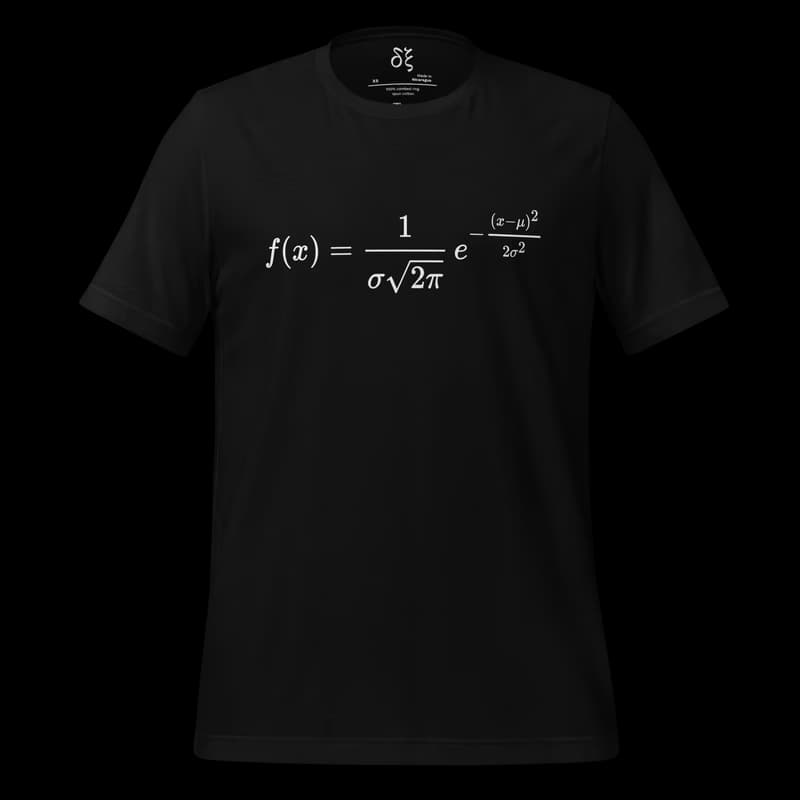
Take independent observations drawn from the same distribution. Suppose their mean mu is finite and their variance sigma squared is finite and positive. In this classical setting, the centred and scaled sample mean approaches a standard normal distribution as the sample grows. The individual observations need not be normal. The theorem concerns a limit, so it does not give a universal sample size at which an approximation becomes good.
Try an example
A single fair die has a flat distribution over six values. Average many independent rolls and the distribution of those averages clusters around 3.5, with a shape increasingly close to a bell curve.
Where it needs care
Dependence, infinite variance or changing distributions can break this version of the theorem. There is no automatic "30 observations is enough" rule.
Historical Context
Abraham de Moivre and Laplace studied early special cases. Later work extended the result beyond binomial sums and clarified its conditions.
Real-World Applications
- Approximate uncertainty in sample means when conditions hold.
- Explain the effect of averaging repeated measurements.